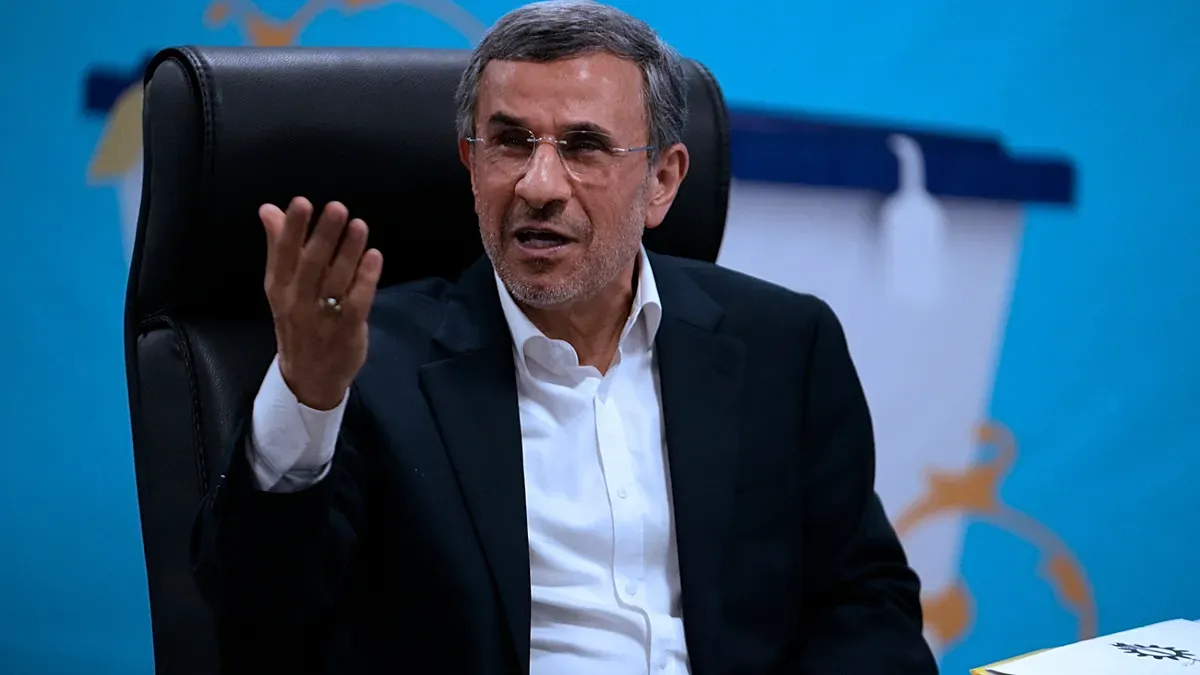

Claims by The New York Times regarding former Iranian President Mahmoud Ahmadinejad's dealings with Israeli Mossad continue to stir controversy. Although Ahmadinejad, who appeared at the funeral and burial of late Iranian Supreme Leader Ali Khamenei, denied the report categorically, Hebrew media rushed to assess the success of Mossad's plan.
The Jerusalem Post published a report stating that plans to recruit Ahmadinejad were 'known for some time,' but data indicates their failure. The paper claimed Ahmadinejad was under house arrest, and quoted former Israeli military intelligence chief Tamir Hayman saying the plan included a series of exceptional special operations, of which Ahmadinejad was a part, alongside other operations not fully disclosed, except for what is known as the 'Kurdish incursion.'
Regarding the reason for the alleged plan's failure, Hayman explained that the 'Kurdish incursion' was supposed to be the cornerstone, but Turkish President Recep Tayyip Erdogan convinced his American counterpart Donald Trump that supporting the Kurds threatens Turkey's stability, prompting Trump to cancel the operation.
Sources close to former Mossad chief David Barnea also said that Washington originally proposed using the Kurds to topple the Iranian regime, based on its previous experience in employing them against Saddam Hussein in 2003. The sources confirmed that Iraqi and Iranian Kurds possess considerable combat capabilities and need no additional training, and Israel was ready to provide them air cover and a no-fly zone.
But there is debate whether Trump was convinced to cancel the operation under the influence of his advisors or Erdogan. Even within Israel, some officials doubted the plan's success, while sources denied that CIA Director John Ratcliffe opposed Kurdish intervention, noting that the agency provided weapons to the Kurds.
Israeli sources accused White House officials of leaking the plan to Erdogan to give him an opportunity to convince Trump to stop it. Had the Kurdish incursion succeeded, Tel Aviv was to break Ahmadinejad's restrictions for him to assume the presidency. But The New York Times suggests Ahmadinejad was not satisfied with the process of freeing him from his home, and cut ties with his Israeli 'recruiters' due to that and because of the war.
The paper raises a question: Had the war gone differently and all Israeli plans been implemented, would Ahmadinejad have continued his commitment to confronting the Iranian regime?
In response, Ahmadinejad's office affirmed that The New York Times report falls within a 'ridiculous scenario' aimed at exploiting the sensitive political and security conditions in Iran and sowing confusion among Iranians. It accused the American paper of spreading misinformation, considering that republishing these claims weeks later with new details is part of 'psychological warfare.'
This controversy comes amid internal political conflict in Iran, as Ahmadinejad's relationship with the late Supreme Leader Ali Khamenei witnessed increasing tension after Ahmadinejad's term ended in 2013. After being barred from running for president several times, he became one of the most prominent critics of some official policies.